





Put simply, mitigation is the work of holding damage to its current size. Do not confuse it with rebuilding. Think of it as all the protective work that comes first, aimed at saving what remains sound. Our Huntington Beach crew mitigates a loss in four moves: control the source, extract the water, contain the wet zone and stabilize the building. When this stage goes right, there is less to rebuild afterward, occasionally nothing at all.
Many homeowners treat restoration and mitigation as one and the same. In fact there are two separate stages. The emergency stage is mitigation, where we stop the loss, keep it from spreading and stabilize the house. Once the structure tests dry, restoration takes over and covers repairing or rebuilding finishes, drywall and floors that were damaged. Insurers treat them as separate line items too, so it helps to know which phase you are in.
A typical mitigation visit covers four things. One: control the source and cut off any new water. Extraction, so standing water is gone. Three: contain the area with plastic sheeting and managed airflow, so clean rooms stay free of moisture and contaminants. Stabilization, which means removing materials that cannot be saved, treating surfaces with antimicrobial, and setting air movers and dehumidifiers. We also protect furniture and belongings by moving or blocking them up.
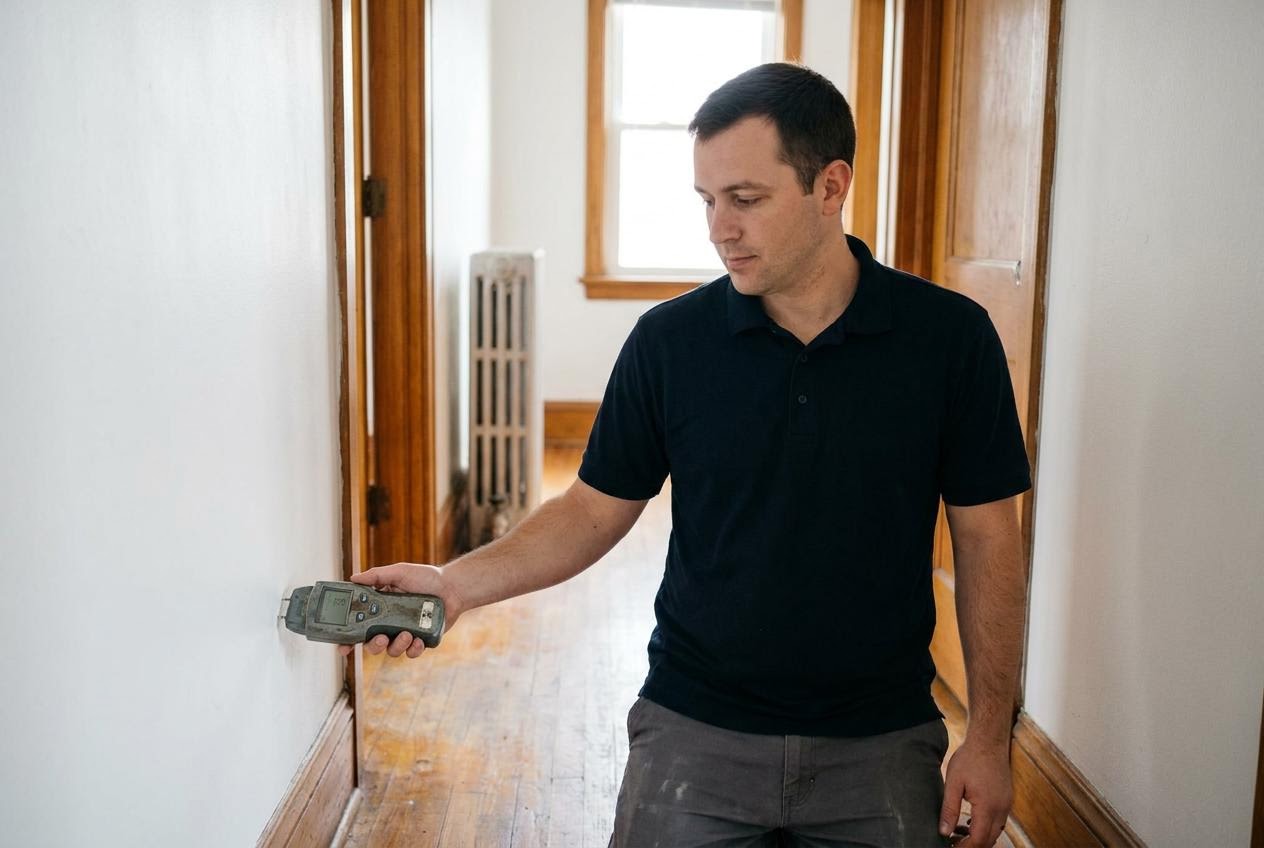
Warning Signs for Water Damage Mitigation
Catching these issues early helps you avoid costly problems and protect your property. Watch for these telltale signs that professional help is needed:
- The insurance company instructed you to take reasonable action against further damage.
- Carpet squishes underfoot, or the pad beneath it is saturated.
- Baseboards are swelling or pulling away from the wall after a leak.
- Windows keep fogging and the air feels humid days after the water loss.
- A leak has been stopped but floors, walls or cabinets are still wet.
- Bathroom or kitchen cabinets are sitting over water that cannot be reached to dry.
- One day on, damp materials are beginning to smell musty.
Act Before It Gets Worse
What seems like a minor issue today can turn into a major expense tomorrow. If you notice any of these signs, contact Huntington Beach Restoration at (475) 203-3930 for a prompt evaluation.
Water Damage Mitigation Issues? We Can Help.
Get a free estimate from our expert team today.
Call (475) 203-3930 NowWhat to Expect From Our Water Damage Mitigation
We follow a proven process to ensure every job is completed to the highest standards. Here's what you can expect when you choose Huntington Beach Restoration:
Control the Source
We shut off the supply, cap the failed line, or tarp and board the opening where water is entering. When the permanent repair calls for a roofer or plumber, we help schedule it.
Extract the Water
Standing water is removed with pumps and extractors, and carpet and pad are checked. Drying machines on their own cannot limit damage the way prompt bulk extraction does.
Set Up Containment
We isolate the affected rooms from the rest through airflow control and plastic barriers. As a result, contaminants, dust and humid air stay put instead of spreading around the house mid-job.
Stabilize the Structure
Unsalvageable materials are removed, surfaces get antimicrobial treatment, and air movers and dehumidifiers are set. Each visit includes logged moisture readings, and the structure is usually ready for repair work within 3 to 5 days.
The Benefits of Professional Water Damage Mitigation
Doing mitigation well means making a string of quick judgment calls. Which drywall can be dried in place and which has to be cut out? Has the water shifted category since the leak started, and is it Category 1, 2 or 3 now? Is removing the cabinet toe kick necessary? Each decision rests on meter readings and our training, never on whether something seems dry to the eye or hand.
Your insurance claim benefits from proper mitigation too. Most policies require the owner to take reasonable steps to prevent further damage, and insurers want proof it was done. On arrival we take photos, then log moisture readings every day and itemize whatever is removed. The result is a file documenting both the damage and the steps taken. The repair contractor gets a clear place to start as well, without hidden moisture waiting behind fresh drywall.
Comparing DIY and Professional Water Damage Mitigation
Some simple tasks are suitable for DIY, but most water damage work benefits from professional tools, training, and experience. Here's a comparison:
| Factor | DIY Approach | Professional Service |
|---|---|---|
| Drying check | Assume a few days was enough | Each visit measured, not guessed |
| What stays or goes | Hoping wet materials recover | Keep or remove, based on moisture readings |
| Contaminated water | Household bleach where you can see | Category-specific antimicrobial applied |
| Isolating wet rooms | Shutting doors to the wet room | Plastic containment with managed airflow |
| Stopping the source | Shut the valve and hope | We prove the source is controlled |
Want a Professional Opinion?
Call Huntington Beach Restoration to discuss your water damage mitigation needs with a IICRC-certified technician.
Call (475) 203-3930 NowHow to Prevent Water Damage Mitigation Problems
A little prevention goes a long way in avoiding expensive restoration emergencies. Here are our expert recommendations:
- A main shutoff that will not turn is no help, so locate and test yours.
- Schedule an annual water heater inspection and swap the unit out before its tank gives way.
- A monthly look around toilets and inside sink cabinets catches drips, staining and spongy flooring.
- Never switch the furnace fully off in freezing weather, since pipes can freeze and split.
- Regrade low spots beside the house where water gathers after rain.
- Trade rubber washer hoses for braided steel, and renew them roughly every five years.
Water Damage Mitigation FAQ
Get Water Damage Mitigation Help Today
The sooner you call, the sooner we can help. Reach Huntington Beach Restoration for same-day service.
Get Help: (475) 203-3930